| The Celtic Cross spread is one of the most popular Tarot spreads, providing varied insight into many aspects of a complex situation and your role in it. The images of the Minchiate Tarot are drawn from a rare surviving 18th century deck of 97 cards - 19 more than the traditional Tarot. It is considered by many to be the single most powerful divination tool on the web, providing deep insight, rich in ancient symbolism, to any question you may pose. If you would like your own copy of the Minchiate Tarot, you can buy it now!
|
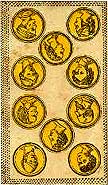 | The card not shown but at the center of the cross, represents the atmosphere surrounding the central issue. Ten of Coins (Wealth), when reversed: Material prosperity and riches squandered through slothfulness, gambling, or family problems. The loss of reputation or inheritance, or the failure to pass an inheritance along to one's children. |
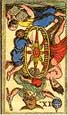
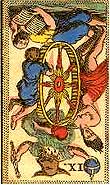 | The card visible at the center of the cross represents the obstacle that stands in your way - it may even be something that sounds good but is not actually to your benefit. Wheel of Fortune, when reversed: An unexpected turn of bad luck. A broken sequence of events. Outside influences for the worse. An inescapable descent due to Fate or Karma. Great changes taking place as a result of earlier actions that cannot be taken back. Misfortune, failure and reluctance to use free will. |
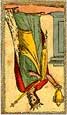
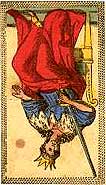 | The card at the top of the cross represents your goal, or the best you can achieve without a dramatic change of priorities. Queen of Swords, when reversed: The dark essence of air behaving as water, such as a cold rain: A person gifted with both keen logic and natural intuition, giving them uncanny powers of perception and insight. One who easily sees the weakness in any argument, and savages friend and foe alike with biting sarcasm. Dry and vicious wit covering a hollow sense of isolation and dissatisfaction with life. |
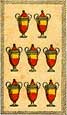
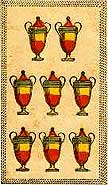 | The card at the bottom of the cross represents the foundation on which the situation is based. Eight of Cups (Indolence): Losing interest in a matter deeply important to you. Being forced to abandon something in which you had invested great love and devotion. Seeking earthly, physical pleasures, to the exclusion of spiritual growth and emotional fulfillment. Emotional withdrawal and lethargy. |
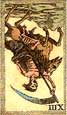
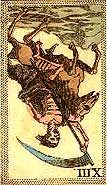 | The card at the left of the cross represents a passing influence or something to be released. Death, when reversed: Stagnation or petrifaction. The refusal to let go of the past. Resistance to change because of fear. |
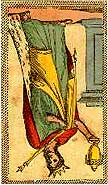 | The card at the right of the cross represents an approaching influence or something to be embraced. Queen of Cups, when reversed: The dark essence of water, such as a deep and foreboding lake: Discomfort with the worlds of mind and matter, leading to a retreat to the spiritual. The embrace of negative relationships, driven by the desperate fear of being alone. Devotion to fantasies and daydreams, to the exclusion of practical skills or the pursuit of knowledge. Insecurity leading to dishonor, vice, and undue susceptibility to outside influences. |
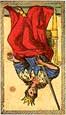
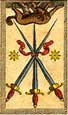
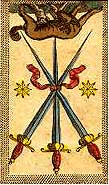 | The card at the base of the staff represents your role or attitude. Three of Swords (Sorrow), when reversed: Unsettling news that helps you to distance yourself from a destructive relationship. Painfully honest communication that needs to take place. Not letting yourself be dragged by your emotions into a negative situation. A trust or confidence betrayed in an attempt to help someone in need. The revelation of a painful truth. |
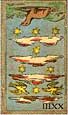
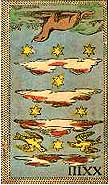 | The card second from the bottom of the staff represents your environment and the people you are interacting with. Air, when reversed: Blindness to the concerns of the real world. Losing yourself in idle theorizing divorced from fact. Inability to recognize the circumstances, emotions, and motivations of others as real and important factors in a decision. The effortless application of excessive and inappropriate force to a situation. |
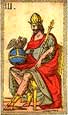
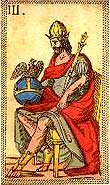 | The card second from the top of the staff represents your hopes, fears, or an unexpected element that will come into play. The Western Emperor: Worldly authority and power. Social mastery and oratory. One who is intelligent, experienced, confident and reasonable. A patriarch or primary male influence. The motive force of politics and society. The ability to fulfill plans and use mental control over the emotions. |
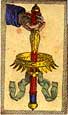
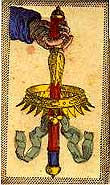 | The card at the top of the staff represents the ultimate outcome should you continue on this course. Ace of Wands, when reversed: The seed of a new crisis - perhaps as yet unseen. The start of an explosive situation threatening to consume all who get too close. The herald of birth, invention, or upheaval. An innate and primal force unleashed. May suggest a surge of vitality, creativity, or fertility that can set dangerous events in motion. |