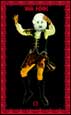
Today's Tarot for Tom Leykis
| The Two Paths spread provides insight into an important decision ahead of you, the possible outcomes, and the forces that draw you towards each of these outcomes. The Curious Tarot is the rarest and most unusual of modern decks. The cards form a surreal collage of American consumer imagery, eerily capturing the archetypes of the atomic age. It is the deck of those who seek to harness the ancient tribal energy that courses through the modern urban world. There are only 100 Curious Tarot decks in existence - if you want one, buy it now!
|
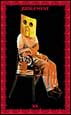
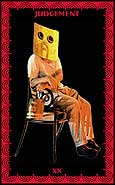 | The top left card represents the first possible outcome. Judgement: A swift and conclusive decision. The resolution of a matter long unanswered. A change in point of view, most frequently towards greater enlightenment. Final balancing of karma. |
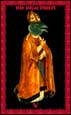
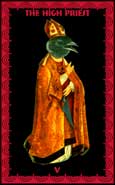 | The top right card represents the second possible outcome. The High Priest: Faith in tradition and the old school. A justified and ancient source of power. Being supportive, sympathetic and loyal. Receiving instructions, learning, guidance or inspiration. The ability to hear a higher or inner voice. May also indicate a religious ritual, such as a marriage or an initiation. |
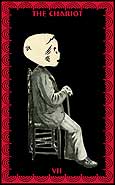 | The middle left card represents the force drawing you towards the first possible outcome. The Chariot: Victory through might. Advancement through bold action. Change through force. Order established through vigilance. A trying situation mastered by balancing opposing forces against each other. Discipline, individual effort and endurance will turn the tide. |
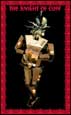
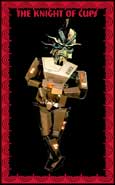 | The middle right card represents the force drawing you towards the second possible outcome. Knight of Cups: The essence of water behaving as fire, such as a rushing river: A passionate romantic, full of charm and beauty, but prone to extremes. Forceful idealism blended with gentle kindness. An eager and intense person, forward with their emotions and tender in their support of others. |
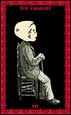
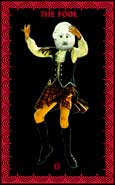 | The bottom card represents the critical factor that decides what will come to pass. The Fool: Fearlessness, imagination, open-mindedness, and an adventurous spirit. Freedom from cares and worries. Ideas, thoughts, and impulses coming from a completely unexpected place. Nonchalance at the threshold of gaining all or losing all. Extravagance and intoxication with life. The pure and undifferentiated power of creation itself, where ultimate knowledge and oblivion are unified. |
|
|