| The Relationship spread provides insight into the interaction between two people or entities. It is the spread of choice for questions about partnerships, be they in romance or business. The International Icon Tarot renders traditional occult symbolism in Swiss iconography. It is a humorous and direct approach to divination, and one of our favorite new decks. If you would like your own copy of the International Icon Tarot, you can buy it now!
|
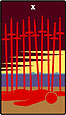
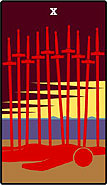 | The card at the top left represents how you see yourself. Ten of Swords (Ruin): Crushing defeat brought about by idle intellectualism divorced from reality. Sadness and desolation in the aftermath of a catastrophic and total collapse. A decisive conclusion brought about through the swift and merciless application of overwhelming force. |
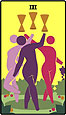
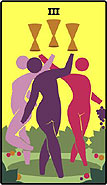 | The card at the top right represents how you see your partner. Three of Cups (Abundance): A time of merriment and reflection spent in the company of friends and loved ones. The conclusion of a matter in plenty and perfection. The strength of a diverse community being brought together. May suggest a celebration, festival, anniversary, wedding, baby shower, or other joyous gathering. |
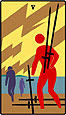
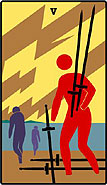 | The card in the center left represents how you feel about your partner. Five of Swords (Defeat): A success earned through personal degradation. Separation from friends brought about by an unfeeling and coldly calculated act. Temporary victory tainted by dishonor and providing fuel for eventual defeat. |
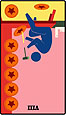
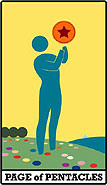 | The card in the center right represents what stands between you and your partner. Page of Pentacles: The essence of earth, such as a mountain: The surprising appearance of new prosperity and opportunities for advance in the physical world. One who delights in the pleasures of the body, material things, and nature. The embrace of hard work, realistic goals, and scholarly perseverance as a means to create solid achievement. Dependability, trust, and a studious nature. May portend a new job or promotion. |
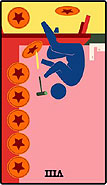 | The card in the lower left represents how your partner sees you. Eight of Pentacles (Prudence), when reversed: Undue attention to small details at the expense of the big picture. Losing yourself in your work, to the detriment of your personal and spiritual life. Making the same mistake repeatedly. Refusing to learn new crafts or skills. |
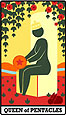
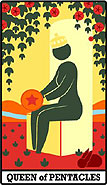 | The card in the lower right represents what your partner feels about you. Queen of Pentacles: The essence of earth behaving as water, such as a hot spring: A warm and generous host, providing shelter and comfort for all who would seek it. A person steadfast, practical, and domestic, able to create opulence and stability in any setting. The qualities of maturity and sensibility, coupled with an innate appreciation for nature and the material world. |
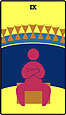
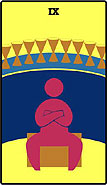 | The card in the center represents the present status or challenge of the relationship. Nine of Cups (Happiness): Contentment and satisfaction in romance, friendship, or other relationships. Achieving your deepest desires and savoring beauty and sensual pleasures. A state of joy and abundance radiating fulfillment and bliss. |