| The Celtic Cross spread is one of the most popular Tarot spreads, providing varied insight into many aspects of a complex situation and your role in it. The Marseilles Tarot is an 18th century creation of obscure origins. It predates the occult symbolism of the Rider Waite deck by roughly 200 years, giving the readings a unique and rustic flavor. Many swear by this deck as the true oracle of the common man. If you would like your own copy of the Marseilles Tarot, you can buy it now! |
 | The card not shown but at the center of the cross, represents the atmosphere surrounding the central issue. Three of Batons (Virtue), when reversed: Pride and arrogance. Convincing oneself that the ends justify the means. A great act of betrayal set in motion. Sinking to the level of an opponent. The vain quest for glory and a personal spotlight. Charity or friendship offered with intent of material gain. |
 | The card visible at the center of the cross represents the obstacle that stands in your way - it may even be something that sounds good but is not actually to your benefit. La Mort (Death): A major change or transformation, possibly traumatic and unexpected. Freedom from the shackles of the past. A new beginning. Death coupled with rebirth, usually related to consciousness and lifestyle. |
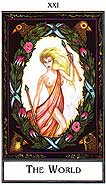
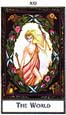
 | The card at the top of the cross represents your goal, or the best you can achieve without a dramatic change of priorities. Le Monde (The World): Completeness and intricacy of design. A great work. Achievement, reward, and well-earned recognition. A time of success, prosperity, security and joy. May also indicate travel or a change in residence. |
 | The card at the bottom of the cross represents the foundation on which the situation is based. L'Hermite (The Hermit): Withdrawal from events and relationship to introspect and gather strength. Seeking the inner voice or calling upon vision from within. A need of understanding and advice, or a wise man who will offer knowing guidance. Personal experience and thoughtful temperance. |
 | The card at the left of the cross represents a passing influence or something to be released. Valet de Coupe (Page of Cups): The essence of water behaving as earth, such as a wellspring: An unexpected new relationship that is playful and spontaneous. A romantic soul who embraces compassion and imagination with childlike joy. Gentle reflections on love, spirituality, and the importance of personal relationships in business and material affairs. May herald the birth of a child. |
 | The card at the right of the cross represents an approaching influence or something to be embraced. Seven of Batons (Valor): Standing courageously for your beliefs in the face of adversity. Fear of failure overcome by the will to succeed. Great obstacles met with heroism and determination. Inner strength brought to bear at a critical moment. |
 | The card at the base of the staff represents your role or attitude. La Justice (Justice): The achievement of balance and inner harmony after a great trial. Agreements, contracts, or treaties concluded justly. Things set to rights. Karma restored. A turn for the better in legal matters. |
 | The card second from the bottom of the staff represents your environment and the people you are interacting with. Roy de Baton (King of Batons), when reversed: The dark essence of fire behaving as air, such as lightning: An exciting and reckless leader who inspires others to irresponsible acts. An artist whose depraved love of chaos causes him to take hold of destructive ideas and make them appealing to the masses. One who is charismatic and intimidating, using demonstrations of his own skill to dupe others into accepting responsibilities beyond their ability. A dashing and magnetic personality, appearing and disappearing with great suddenness, and leaving upheaval in his wake. |
 | The card second from the top of the staff represents your hopes, fears, or an unexpected element that will come into play. Six of Batons (Victory), when reversed: Arrogance and dangerous overconfidence as the result of a past success. Impudence and false pride in meaningless achievements. Fear of failure coupled with false hopes. Frustration over indefinite delays and motion without progress. |
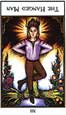
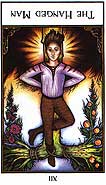
 | The card at the top of the staff represents the ultimate outcome should you continue on this course. Le Pendu (The Hanged Man): Pausing to reflect. Surrendering to an experience. Adjusting to new ideas through sacrifice. Opening oneself to intuition and enhanced awareness. Letting go of past patterns and growing beyond them. Inner peace, faith, and serenity. |