| The Celtic Cross spread is one of the most popular Tarot spreads, providing varied insight into many aspects of a complex situation and your role in it. The Cat People Tarot paints a picture of faraway lands trod by mystical archetypes and their feline companions. This deck is a perfect tool for dreamers and idealists, and is a great choice for divining the nature of human imagination. If you would like your own copy of the Cat People Tarot, you can buy it now! |
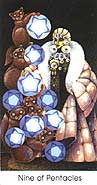 | The card not shown but at the center of the cross, represents the atmosphere surrounding the central issue. Nine of Pentacles (Gain): Accomplishment. Discernment. Discretion. Foresight. Safety. Prudence. Material well-being. Love of nature. |
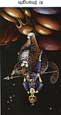
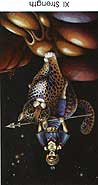 | The card visible at the center of the cross represents the obstacle that stands in your way - it may even be something that sounds good but is not actually to your benefit. Strength, when reversed: Weakness. Pettiness. Impotence. Sickness. Tyranny. Lack of faith. Abuse of power. Succumbing to temptation. Indifference. |
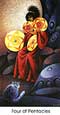
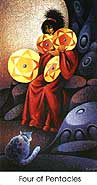 | The card at the top of the cross represents your goal, or the best you can achieve without a dramatic change of priorities. Four of Pentacles (Power): Love of material wealth. Hoarder. Usurer. Skinflint. Miser. Ungenerous person. Inability to share. |
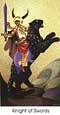
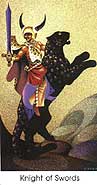 | The card at the bottom of the cross represents the foundation on which the situation is based. Knight of Swords: Bravery. Skill. Capacity. The strength and dash of a young man. Heroic action. Opposition and war. Impetuous rush into the unknown without fear. |
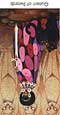
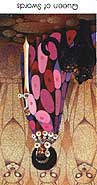 | The card at the left of the cross represents a passing influence or something to be released. Queen of Swords, when reversed: Narrow-minded. Maliciousness. Bigotry. Deceitfulness. Vengefulness. Prudishness. A treacherous enemy. An ill-tempered person. |
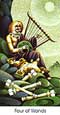
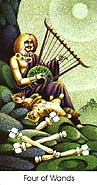 | The card at the right of the cross represents an approaching influence or something to be embraced. Four of Wands (Completion): Romance. Society. Harmony. Newly acquired prosperity. Peace. Tranquility. The fruits of labor. Rest after strife. |
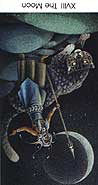 | The card at the base of the staff represents your role or attitude. The Moon, when reversed: A minor deception recognized before any damage is done. Trifling mistakes. Overcoming bad temptations. Gain without paying the price. Taking advantage of someone. |
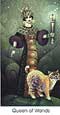
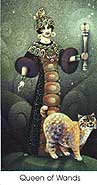 | The card second from the bottom of the staff represents your environment and the people you are interacting with. Queen of Wands: A sympathetic and understanding person. Friendly, loving, honorable and chaste person. Practicality. Feminine charm and grace. Capacity for meaningful expression and love. Gracious hostess. Sincere interest in others. |
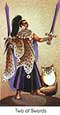
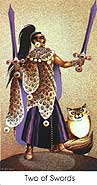 | The card second from the top of the staff represents your hopes, fears, or an unexpected element that will come into play. Two of Swords (Peace): Balance force. Harmony. Firmness. Concord. Offsetting factors. Stalemate. Affection. |
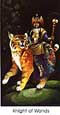
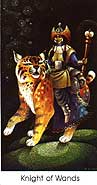 | The card at the top of the staff represents the ultimate outcome should you continue on this course. Knight of Wands: Departure. A journey. Advancement into the unknown. Alteration. Flight. Absence. Change of residence. |