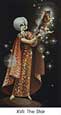
| The Shadow Truth spread provides insight into your attitudes and hidden feelings. This spread is used when you are having trouble confronting something, or fear that you are concealing something from yourself. The Cat People Tarot paints a picture of faraway lands trod by mystical archetypes and their feline companions. This deck is a perfect tool for dreamers and idealists, and is a great choice for divining the nature of human imagination. If you would like your own copy of the Cat People Tarot, you can buy it now! |
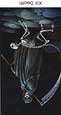
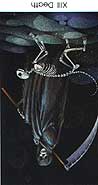 | The card in the center represents the attitude you assume. Death, when reversed: Stagnation. Immobility. Slow changes. Partial change. Inertia. Narrowly avoiding a serious accident. |
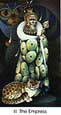
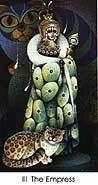 | The card to the right represents the thoughts and feelings that underly your attitudes. The Empress: Feminine progress. Action. Natural energy. Development. Fruitfulness. Accomplishment. Interest in day-to-day details. Mother. Sister. Wife. Marriage. Children. Feminine influence. Material wealth. Evolution. A leader. Decisions founded upon all the facts at hand. The motivator of a successful partner or husband. Businesswoman. |
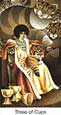
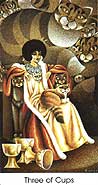 | The card at the top represents how your attitude is evolving and will evolve in the future. Three of Cups (Abundance): Resolution of a problem. Conclusion. Solace. Healing. Satisfactory result. Partial fulfillment. Compromise. |
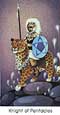
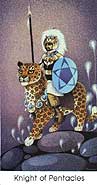 | The card to the left represents how others perceive your attitude. Knight of Pentacles: A mature and responsible person. Reliability. Methodical and patient person. Persistence. Ability to conclude a task. Laborious, organized, capable and dependable person. |
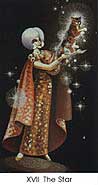 | The card at the bottom represents what you cannot confront or are hiding from yourself. The Star: Hope. Faith. Inspiration. Bright prospects. Mixing of the past and present. Optimism. Insight. Good omen. Spiritual love. Ascending star. Astrological influence. Satisfaction. Pleasure. The proper balance of desire and work, hope and effort, love and expression. |